
Loyalty cards for customers are no longer just paper punch cards sitting beside a cash register. In 2026, they can be physical cards, digital wallet passes, QR codes, app memberships, or simple stamp cards that help a business reward customers for coming back.
This guide is for small business owners, managers, and marketers looking to implement or improve customer loyalty card programs.
The goal is simple: make the next purchase feel obvious, valuable, and convenient. This guide breaks down the main loyalty card options, how they work, and how a small business can create a practical program without overcomplicating the customer experience.
Key Takeaways
-
Modern loyalty cards, especially digital and QR code-based cards, can reliably boost repeat business, repeat purchases, and long-term customer loyalty.
-
Paper punch cards are still useful for simple, low-tech businesses, but digital loyalty programs offer better tracking, automation, fraud control, and customer insights.
-
Custom loyalty cards can be launched in days, not months, with a quick comparison between paper punch cards, QR code stamps, and app-based loyalty platforms.
-
Community programs like Chandler Flex Rewards show how local rewards can encourage shoppers to spend more money with neighborhood businesses by collecting digital stamps for every $15 spent.
-
The best programs use clear reward structures, simple rules, strong branding, and rewards that customers already want.
What Are Customer Loyalty Cards and Why They Matter in 2026
A loyalty card is a tool that offers value-added rewards and personalized experiences to customers who make repeat purchases.
Customer loyalty cards are physical or digital cards that track visits, points, stamps, or purchases so a business can reward repeat customers. A coffee shop might offer a free coffee after nine purchases. A salon might give a free treatment after six visits. A grocery store might use QR codes in an app to track points and discounts.
A loyalty card is the tool. The broader loyalty program is the strategy behind it: who can join, how members earn rewards, what perks they get, how promotions work, and how customer data is handled.
This distinction matters because loyalty is not created by the card alone. Increased customer loyalty comes from the full customer experience: the offer, the ease of use, the staff script, the reminders, and the value customers feel each time they return.
By mid-2026, most major retailers and many local businesses use some version of loyalty programs. Yet SumUp reported that 73.2% of U.S. micro and small businesses still did not have a formal loyalty program in late 2025. That leaves a major advantage for owners willing to start simple.
There is also a community angle. Shop-local initiatives often point out that around $68 of every $100 spent locally tends to stay in the community. Local blogs and resources that highlight community rewards programs, local business promotions, and holiday activities, such as a Chandler-focused community rewards and events blog, reinforce why shopping nearby matters. When loyalty cards encourage more in-store purchases at local businesses, they can support jobs, public services, and neighborhood activity.
Programs like the Chandler Flex Rewards digital stamp card in Chandler, Arizona, drive repeat business for local companies by rewarding shoppers who spend $15 at participating businesses with a digital stamp. These stamps accumulate to unlock chances to win gift cards and access exclusive local deals, similar to guides that explain how to collect stamps and win gift cards or simple three-step overviews on snagging local gift cards and winning big, supporting both customers and the Chandler community.
Digital Loyalty Cards vs Paper Punch Cards: A Quick Comparison
Both digital loyalty cards and paper punch cards can work. The right choice depends on your budget, customer behavior, staff capacity, and whether you need data.
Here is a quick comparison in plain terms:
-
Paper punch cards are easy to understand. A customer receives a card, staff add a punch or stamp after each eligible purchase, and the customer redeems when the card is full.
-
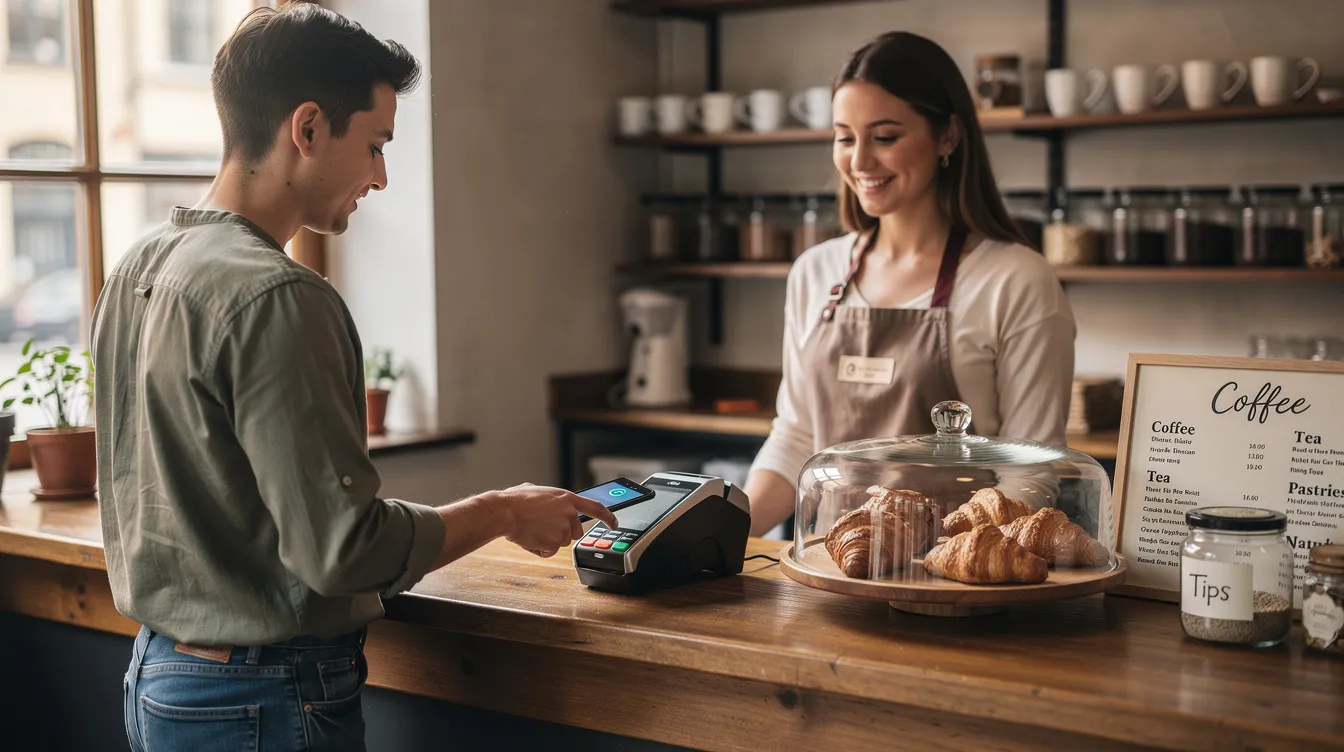
Digital loyalty cards use a phone, app, wallet pass, QR codes, or customer account to track rewards automatically.
Convenience is the biggest difference. Customers may forget a paper card at home, but they rarely forget their phones in 2026. Some research cited by loyalty card providers suggests many consumers now prefer mobile cards, while FaveCard notes that 39% of customers abandon paper loyalty programs because they misplace their cards.
Cost works differently for each format. Punch cards have low upfront costs: design, print, and a stamp tool. Digital programs may involve software, app fees, per-location pricing, or payment integration. However, once a digital system is live, adding more loyalty members usually costs very little, especially with POS-agnostic options like a small-business friendly loyalty platform for local programs.
Tracking is where digital has the clear advantage. Digital loyalty cards can log visits, purchase amounts, rewards, redemptions, and lapsed members. Paper cards are almost impossible to analyze at scale because you cannot easily connect one card to a customer profile.
Security also matters. Digital systems can flag duplicate redemptions, unusual activity, or suspicious patterns. Paper cards are easier to lose, copy, or fake.
Paper still makes sense for food trucks, pop-ups, market stalls, solo stylists, and very small businesses that need speed over analytics. Digital loyalty cards are usually superior for multi-location stores, high foot traffic brands, online and in-store sales, or owners who want better customer profiles and measurable engagement, especially when they use a digital stamp card app that replaces paper punch cards and provides a more organized alternative to traditional coupons through a local rewards program.
Core Types of Loyalty Cards and Programs
Most loyalty cards fit a handful of proven models. The best choice depends on what behavior you want to encourage: more visits, larger baskets, referrals, memberships, or community support.
-
Point-based loyalty cards: Customers earn points per dollar or per visit. For example, a retail boutique might offer 1 point per $1, with 100 points equal to $5 off. This works well when purchase values vary.
-
Punch cards and stamp cards: These use simple “buy X, get Y free” reward structures. Examples include “Buy 9 coffees, get the 10th free” or “Get a free haircut after your 6th visit.” These are ideal when the product or service is purchased often.
-
Tiered loyalty programs: Customers move through Bronze, Silver, and Gold levels as they spend more. Each tier unlocks better perks, such as higher discounts, early access, or exclusive promotions. The risk is creating too many tiers, which can confuse customers and staff.
-
Value-based and mission-driven programs: These connect loyalty to a bigger purpose. A local grocer might donate a portion of loyalty redemptions to Chandler-area nonprofits. This can deepen customer loyalty because members feel their purchase supports something beyond the transaction.
-
Paid or VIP loyalty cards: These use a paid membership model. Amazon Prime is the best-known example, but local businesses can use the same idea. A salon might offer a monthly card with priority booking, free samples, product discounts, or fast delivery on beauty products.
-
Referral and community cards: These reward customers for referring friends, attending events, or joining local campaigns. This turns loyalty into a community-building tool, not just a discount engine.
The most important rule is to match the incentive to the business. A bakery may benefit from free items. A fitness studio may benefit from perks and access. A boutique may benefit from points and special promotions.
How Digital Loyalty Cards Work (QR Codes, Apps, and Customer IDs)
Digital customer loyalty cards may sound technical, but the customer journey is simple. A shopper joins through an app, link, SMS signup, or wallet pass. At checkout, the customer scans a code or staff scans the customer’s unique loyalty code.
The loyalty system then updates the account. The customer may collect a stamp, earn points, unlock a reward, or receive confirmation by email, SMS, app notification, or wallet update.
Behind the scenes, most digital loyalty programs follow this pattern:
-
The POS records the transaction.
-
The loyalty platform connects the purchase to a unique loyalty ID.
-
The system updates points, stamps, or rewards.
-
The customer receives confirmation.
-
The business dashboard records activity for reporting.
That unique ID is what makes omnichannel loyalty possible. It can connect online orders, in-store purchases, mobile orders, and special promotions into one account.
Digital cards can be app-based, SMS-based, web-based, or stored in a wallet. This means many small businesses do not need plastic cards, magnetic stripes, or NFC technology. A QR code and the right mobile-compatible digital rewards card platform, such as a top-ranked Chandler local rewards app like the Chandler Flex Rewards app in Chandler, Arizona, may be enough for customers who want a Chandler local rewards & loyalty app.
Privacy should be part of the setup from day one. Ask for clear opt-in consent, allow easy unsubscribe, and explain how purchase data will be used. A Deloitte loyalty survey found that easy redemption, personalization, and strong digital features are major drivers of loyalty behavior.
Designing Custom Loyalty Cards That Customers Actually Use
Custom loyalty cards should feel like part of your brand, not a random coupon. They need to look professional, be easy to understand, and make the next action obvious.
Use these design principles:
-
Brand consistency: Add your logo, colors, fonts, and visual style so the card matches your menu, website, packaging, and store signage.
-
Clarity of offer: State the reward in plain language. For example: “Collect 8 stamps, get a free drink” or “Earn 5 points per $1 – 500 points = $5 off.”
-
Front vs back layout: Put the main benefit, QR code, barcode, or stamp area on the front. Use the back for expiry, exclusions, and terms.
-
Physical specs: If printing cards, the standard CR-80 credit-card size is 3.375″ x 2.125″. Paper is cheap and fast. Plastic feels more durable. Magnetic stripes and NFC can work, but they are often unnecessary for a small business.
-
Accessibility: Use readable fonts, strong contrast, and scannable QR codes. A card that looks nice but fails under store lighting will hurt convenience.
-
Call-to-action: Tell customers exactly what to do: “Scan this QR code to join in 30 seconds” or “Present this card every visit for your stamp.”
If you use a digital platform, check whether it includes templates. Many platforms let you upload your logo, choose colors, create a custom loyalty design, and publish a wallet card without hiring a developer.

Step-by-Step: Setting Up a Simple Loyalty Card Program in Under a Week
You do not need advanced technology skills to launch a basic loyalty program. A simple version can be live in under seven days if you focus on one goal and one offer.
-
Define a single goal
Choose one primary outcome. For example: “increase monthly repeat visits by 20%,” “grow email subscribers by 500 by December 2026,” or “bring current customers back twice per month.” -
Choose your format
Pick between paper punch cards, QR code loyalty cards, or a full app-based loyalty platform. If you only need simplicity, paper may be enough. If you want automation and customer profiles, choose digital. -
Set rewards and thresholds
Make the reward valuable but safe for margins. For example, if a drink costs you $1.20 to make and sells for $5, giving one free after eight purchases may still be profitable. You can also offer free samples, upgrades, or small discounts instead of a full free product. -
Brand and print or publish
Create the card with your logo, brand colors, reward copy, and CTA. Then either send it to print or publish it through your digital system. -
Train staff
Make a short checklist and a 5-minute script. Staff should know how to explain the program, add a stamp, help customers join, and answer basic questions. -
Launch and announce
Use email, social posts, in-store posters, website banners, and receipts. Be specific: “Program begins July 1, 2026.” If possible, offer a launch bonus. -
Track results
Review enrollments, active cards, repeat purchase rate, total redemptions, and sales from loyalty members after 30, 60, and 90 days.
The best way to start is not to build the perfect system. Start with a clear reward, then improve it based on real customer behavior.
Reducing Signup Friction: Getting Customers to Join in 30 Seconds
A loyalty program can fail if signup takes too long. Customers do not want to create a complicated account while a line forms behind them.
Here are practical ways to reduce friction:
-
Limit required fields: Ask for first name and email or mobile number. Make birthdays, preferences, and extra details optional.
-
Use an instant reward hook: Offer “join now, get 10% off today,” a bonus stamp, a free sample, or early access to a new product.
-
Give staff one simple script: “Would you like a digital stamp card? It takes 20 seconds and you earn a free item after 8 visits.”
-
Use contactless onboarding: Put QR code posters at the entrance, tables, counter, and receipt area so customers can enroll during wait times.
-
Keep language clear: Avoid jargon like “ecosystem” or “omnichannel.” Say “Scan to collect rewards” or “Join free in 30 seconds.”
The easier it is to join, the more members you will collect. And the more members you collect, the more useful your loyalty data becomes.
Using Data from Loyalty Cards to Improve Customer Loyalty
Even simple loyalty cards can create valuable data. The point is not to collect data for its own sake. The point is to understand what drives repeat business and better customer loyalty.
Key Data Insights
Focus on these areas:
-
Visit patterns: Track whether customers return weekly, monthly, or only during promotions. If someone usually visits every two weeks but has not returned in 30 days, send a reminder.
-
Top customers: Identify the top 10–20% of customers by spend or frequency. Offer VIP perks, surprise freebies, or early access to deepen loyalty.
-
Product insights: Look at what rewards are redeemed most often. A free dessert might bring restaurant customers back on slower nights. A small upgrade may outperform a discount.
-
Campaign testing: Test one offer against another. For example, compare a free sample against $5 off and see which one drives more repeat purchases.
-
Dynamic segments: Many loyalty platforms let you create dynamic segments, such as “customers who visited twice but never redeemed” or “members who have not purchased in 45 days.”
Good segmentation helps you avoid sending the same promotions to everyone. Loyal customers, new members, and nonmembers may all need different messages.
Make sure your data practices are transparent. Follow email and SMS opt-in rules, explain what data you collect, and give customers control over communications.
Local and Community-Focused Loyalty Cards (with Chandler Example)
City or district-wide loyalty cards can encourage shoppers to support local businesses instead of big-box stores or purely online retailers. These programs work especially well when individual businesses plug into a shared campaign rather than building everything alone, especially during seasonal pushes like holiday double-stamp local rewards promotions or sweepstakes-style campaigns that let shoppers win big with local gift card rewards.
Chandler Flex Rewards in Chandler, Arizona is a free app-based program that rewards shoppers for supporting participating local businesses. Customers spend $15 at a participating business to earn a digital stamp, then unlock chances to win gift cards and access local deals using the Chandler Flex Rewards local loyalty app.
The mechanics are simple. Shoppers sign up, visit a participating store, and scan a QR code at checkout to collect stamps using a digital loyalty program for local shops and restaurants, such as the Chandler Flex Rewards app for shopping and dining. The program also highlights the local economic impact, noting that about $68 of every $100 spent locally stays in the community.
This type of loyalty program gives each small business shared exposure, shared promotions, and a stronger community message through a digital loyalty platform that offers rewards, discounts, and increased visibility, such as the Chandler Flex Rewards local deals platform. It also gives shoppers a reason to explore more local services, restaurants, and stores.
If your city, chamber of commerce, or downtown district offers a similar program, consider joining before building from scratch. A loyalty program designed specifically for small businesses, like the Chandler Flex Rewards platform for small local businesses, can be a practical way to create engagement while keeping setup work low, and merchants can usually find details on features and pricing through a merchant sign-up page for the local rewards program or reach out via a contact form for the loyalty app team.
Best Practices and Common Mistakes with Customer Loyalty Cards
The best loyalty programs are easy to explain, easy to redeem, and profitable for the business. The worst ones feel confusing or make customers work too hard for small rewards.
Best Practices
-
Keep rules simple: Customers should understand how to earn and redeem within 10–15 seconds.
-
Communicate often: Send progress updates, reminders, and time-limited promotions like “You’re 2 stamps away from your reward.”
-
Align rewards with margins: Choose rewards that feel valuable but do not erase profit. Free add-ons, upgrades, and samples can work better than large discounts.
-
Make redemption easy: If rewards are hard to use, customers will stop caring.
-
Listen to staff: Employees hear where customers get confused. Their feedback can improve the program quickly.
Common Loyalty Card Mistakes
-
Never expiring points without planning: Unlimited points can become a financial liability. Use clear expiration policies and reminder campaigns.
-
Copying big brands blindly: A local coffee shop does not need the same complexity as a national chain. Simple stamp cards may outperform complicated tiers.
-
Adding too many tiers: Tiered programs can motivate higher spend, but too many tiers make the program harder to understand.
-
Ignoring nonmembers: Use signage, receipts, and staff scripts to show nonmembers what they are missing.
-
Making rewards feel cheap: The reward does not have to be expensive, but it must feel worth the customer’s attention.
According to CNBC reporting on restaurant loyalty, loyalty members can visit restaurant brands more often than non-members, and major brands like Starbucks generate a large share of transactions from rewards members. The lesson for smaller businesses is clear: loyalty works when it is simple, visible, and consistently promoted.
FAQs About Customer Loyalty Cards and Programs
How much does it cost to start a loyalty card program for a small business?
A basic paper punch card program can often start with a small print run, usually under $50–$200 depending on quantity, paper quality, and design. If you already have a logo and a simple offer, setup can be very quick.
Digital loyalty platforms vary more. Some charge monthly fees, per-location pricing, or fees based on active users. Total cost may include design, QR code setup, staff training, and time spent managing promotions.
Most small businesses can launch a simple loyalty program for a few hundred dollars or less initially, especially if they avoid custom app development and start with templates.
Are paper punch cards still worth using in 2026?
Yes, paper punch cards are still worth using for very small, mobile, or low-tech businesses. Food trucks, market stalls, pop-ups, and solo stylists can use them because they are cheap, fast, and easy to understand.
The downside is that paper cards are easy to lose and hard to measure. If your business grows or you want better data, you can upgrade to digital loyalty cards later.
How do I prevent fraud or abuse of my loyalty card program?
Start with simple rules. Limit one card per person, set reasonable daily earning caps, and require staff approval for large redemptions. If you use paper cards, use a unique stamp or punch that is hard to copy.
Digital loyalty cards are stronger for fraud prevention because QR codes, customer IDs, and transaction history can reveal suspicious patterns. You can also block duplicate redemptions and review unusual activity.
What kind of rewards work best to drive repeat business?
The best rewards are items customers already want and understand. Free drinks, free coffee, free samples, upgrades, birthday perks, and modest discounts usually work better than complicated point conversions.
Cash-like value also performs well. For example, “$5 off after 100 points” is easier to understand than a vague reward catalog. If customers can quickly see the value, they are more likely to come back.
How quickly should I expect to see results from a new loyalty program?
If you promote the program actively, you may see more signups and repeat visits within the first 30–60 days. Staff participation is critical because customers often join only after someone explains the benefit.
Review results after the first three months. Look at active members, redemptions, repeat purchase behavior, and customer feedback. Then adjust the threshold, reward, or message instead of abandoning the program too early.
Loyalty cards for customers work best when they are simple, visible, and built around real customer behavior. Start with one clear reward, make joining easy, and use the first 90 days to learn what your customers value most.